
June is Men’s Mental Health Awareness Month
While there is often a strong focus on men’s physical health — fitness, annual checkups, and heart health — mental well-being is equally as important. Just as the body needs care and attention, so does emotional and mental well-being. Yet, there is a silent crisis in men’s mental health — one that too often goes unnoticed or unspoken. Men are nearly four times more likely to die by suicide than women*, underscoring the urgent need to break this silence and seek support.
In 2024, among U.S. men* age 18 and older:
- 20% experienced a mental illness
- 21.3% experienced a substance use disorder
- 42.1% with a mental illness received treatment in the past year
- 4.7% experienced a serious mental illness
- 5.5% had serious thoughts of suicide in the past year
*Data from SAMHSA and CDC, and reflects individuals assigned male sex at birth
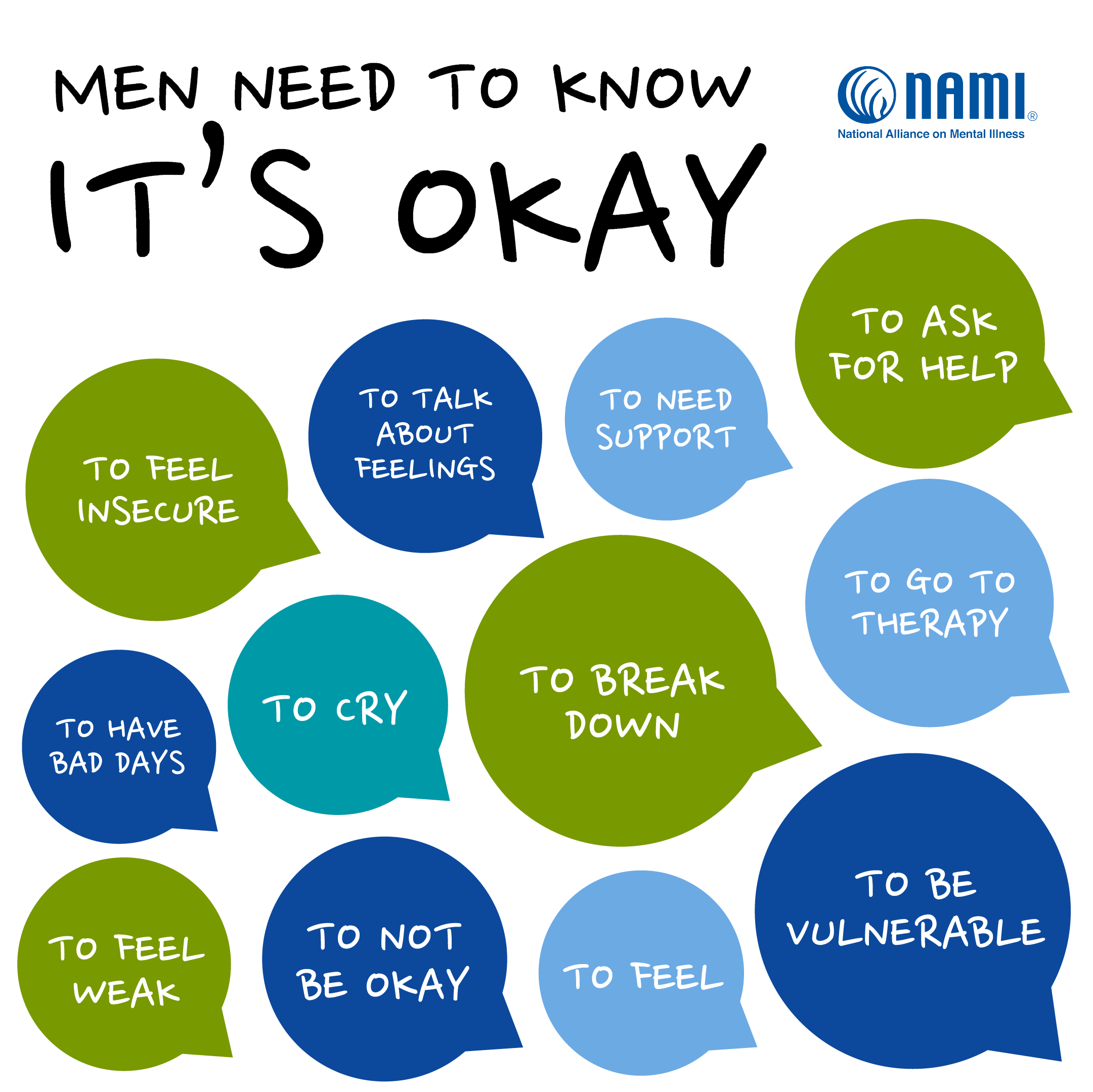
Men’s Health: Learn About It
Learn all about men’s mental health including common conditions, mental health symptoms, and things that can get in the way of asking for mental health help.
(Resource: Are there mental health resources and support specifically for men? - NAMI HelpLine)
- NAMI Blog: 5 Myths that Prevent Men from Fighting Depression reviews 5 common myths that can keep men from getting the mental health help they need.
- Anxiety and Depression Association of America "Men’s Mental Health" provides an overview of men’s mental health and why it’s important. This webpage also lists personal stories and resources for getting help.
- Man Therapy offers a list of “Men’s Mental Health Topics” including anxiety, anger, grief, trauma, thriving, and more.
- Medical News Today "Men's mental health: What you need to know" details warning signs and risk factors for poor mental health, common mental health conditions in men, and what it looks like to get help for yourself or a loved one.
- Medical News Today “Mental health for transgender men: What to know” describes unique mental health challenges that transgender men experience, how drugs, hormones, and gender dysphoria relate to mental health, and steps for getting mental health help as a transgender man.
- The Skill Collective Men’s Health provides an overview of men’s mental health and well-being, discusses men’s attitudes toward health, outlines steps that can be taken to improve men’s physical and mental health, and offers free men’s mental health resources for download.
Quad Cities Area Men’s Mental Health Offerings in June
The Brotherhood Table
Wednesday, June 24, 2026 | 5:30 PM – 7:30 PM
Martin Luther King Jr. Community Center
630 9th Street, Rock Island, IL
In recognition of Men's Mental Health Month, the MLK Center Prevention Team is hosting The Brotherhood Table, a free gathering designed to create a supportive space where men can connect, share experiences, build community, and engage in honest conversations about mental health, wellness, and life.
Whether participants want to listen, share, learn, or simply be in community with others, all are welcome. There is no cost to attend.
Life Skills Group for Men
Beginning July 2026 | Every Other Tuesday | 11:30 AM - 12:00 PM
Martin Luther King Jr. Community Center
630 9th Street, Rock Island, IL
The MLK Center Family Advocacy Center will launch a new Life Skills Group for Men designed to support participants in developing the social, emotional, physical, and mental skills needed for success in everyday life.
Through discussion, peer support, and practical learning opportunities, participants will build tools for healthy relationships, emotional wellness, personal growth, decision-making, communication, and overall well-being. The group provides a welcoming environment where men can learn, connect, and strengthen skills that support long-term success for themselves, their families, and their communities.
Reach Out When You Need Support
If you or someone you love needs support, remember that our EAP counselors are here for you. When you call, let the scheduling staff know what issues you are looking for assistance with, and they will find the best counselor to care for your needs. Your employer covers the expense of up to six counseling sessions per year for you and your eligible family members. Should you wish to continue counseling after your initial sessions, your provider will discuss recommendations for additional care with you.
To schedule an EAP appointment please call (309) 779-2273 or toll-free at (800) 383-7900. EAP service questions? Contact [email protected].